A rent report is not just renter news.
It is one of the quickest ways to see where housing pressure is building, especially in places like Toronto, North York, Mississauga, Brampton, and the rest of the GTA. Before someone becomes a buyer, they are often a renter trying to save. Before an investor buys a condo, they are checking whether the rent can carry the property. Before a seller prices a smaller unit, they are thinking about who the buyer pool might be.
That is why the October 2026 National Rent Report from Rentals.ca is worth paying attention to beyond the headline number.
The monthly rent figure matters, but the bigger story is what rental movement says about affordability, timing, investor confidence, and mortgage planning.
Rent Often Shows Affordability Pressure First

Rent is usually the payment people feel before they ever apply for a mortgage.
If rent keeps taking a bigger share of a household’s income, saving for a down payment gets harder. That can slow down contributions to an FHSA, delay debt repayment, or make it tougher to keep cash available for closing costs.
For a first-time buyer paying an extra few hundred dollars a month in rent, that money has to come from somewhere. Often, it comes directly out of savings.
If rents are flat or softening, the conversation changes. Some renters may decide they have more time before buying. Others may use the breathing room to clean up debt, save more aggressively, or wait for the right property instead of forcing the move.
Neither choice is automatically right. The point is that rent affects the buyer pipeline long before those buyers start booking showings.
Investors Are Looking at More Than the Rent Number

For landlords and small investors, the Rentals.ca report is useful, but it is only one part of the math.
The real question is whether the rent supports the full cost of ownership.
That includes the mortgage payment, property tax, condo fees, insurance, repairs, maintenance, vacancy risk, and future renewal risk. A unit can look strong based on advertised rent and still be tight once financing is included.
This is where newer investors can get caught. They see a rent number and assume the property works. But if the mortgage rate is higher than expected, the amortization is shorter, or the renewal payment jumps, the cash flow can change quickly.
Rental demand matters. Financing structure matters just as much.
A property that almost works at purchase can become stressful if there is no room for repairs, vacancy, or a different rate environment later.
The GTA Story Is Always More Local Than National

National rent reports are helpful, but they can hide big differences between neighbourhoods.
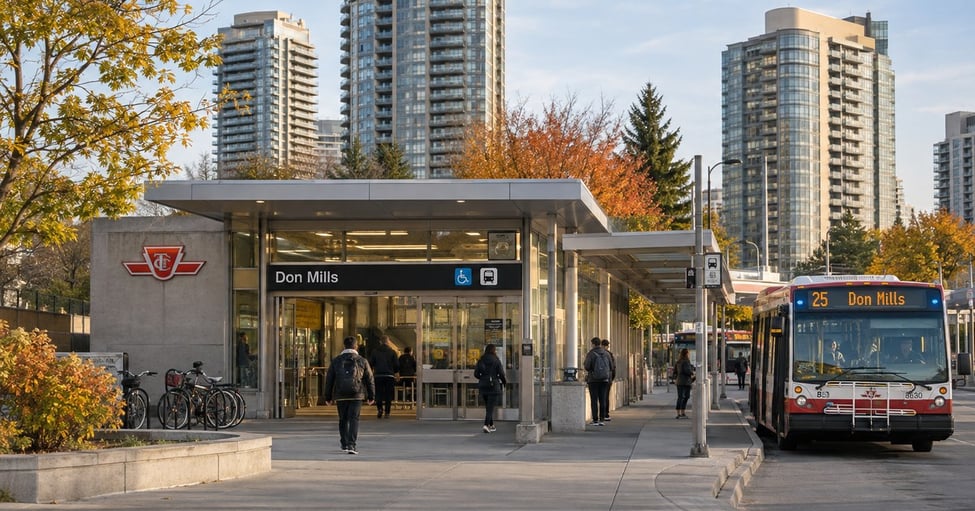
A rent trend in Vancouver does not tell you exactly what is happening near Don Mills Station. A downtown Toronto condo does not behave the same way as a legal basement apartment in Brampton, a townhouse in Milton, or a two-bedroom unit near Square One.
In the GTA, renters are making very specific decisions. Transit matters. Parking matters. Commute time matters. School zones, family size, building condition, and whether a unit has outdoor space can all affect what someone is willing to pay.
A one-bedroom condo close to the TTC attracts a different renter than a basement suite in a family neighbourhood. Both are rentals, but they are not the same product.
So if you are looking at an investment property, the national report is a starting point. You still need local rent comparables, days-on-market context, tenant demand, and a realistic view of the unit itself.
What This Means for First-Time Buyers
For first-time buyers, rent is often the payment they compare against a mortgage.
That comparison can be useful, but it can also be misleading.
A mortgage payment may be higher than rent, but part of that payment builds equity. At the same time, ownership comes with costs renters may not be paying directly: property tax, repairs, home insurance, utilities, condo fees, and larger emergency expenses.
So the better question is not, “Is buying cheaper than renting?”
The better question is, “Can I afford the full cost of owning without putting myself under pressure?”
That matters if rent has already stretched the budget. If saving has been difficult while renting, buying needs to be planned carefully. Getting approved is not the finish line. The goal is owning in a way that still leaves room for real life.
Sellers Should Pay Attention Too
Rental trends can affect sellers, especially in condo-heavy markets.
If rents are strong, investors may be more willing to look at smaller units because the income side feels more supportive. If rents soften, those same buyers may become more cautious, negotiate harder, or step back entirely.
That matters when pricing a property likely to attract investor attention.
An investor is not only looking at finishes and location. They are running numbers. What can it rent for? What is the monthly carrying cost? How much cash is needed to close? What happens at renewal? Is there enough margin if the unit sits vacant for a month?
If those numbers are tight, the list price has to make sense.
The Bigger Takeaway
The October 2026 National Rent Report from Rentals.ca is a reminder that the rental market and ownership market are connected.
Rent affects how quickly tenants can save. It affects whether investors can carry properties. It affects buyer timing, seller strategy, and mortgage planning.
So when a rent report comes out, do not stop at whether the headline number is up or down. Ask what it means for the renter trying to save, the landlord trying to carry a property, and the buyer deciding whether now is the right time to move.
*The takeaway:* rent is not separate from the housing market. It is one of the clearest places to see affordability pressure before it shows up somewhere else.