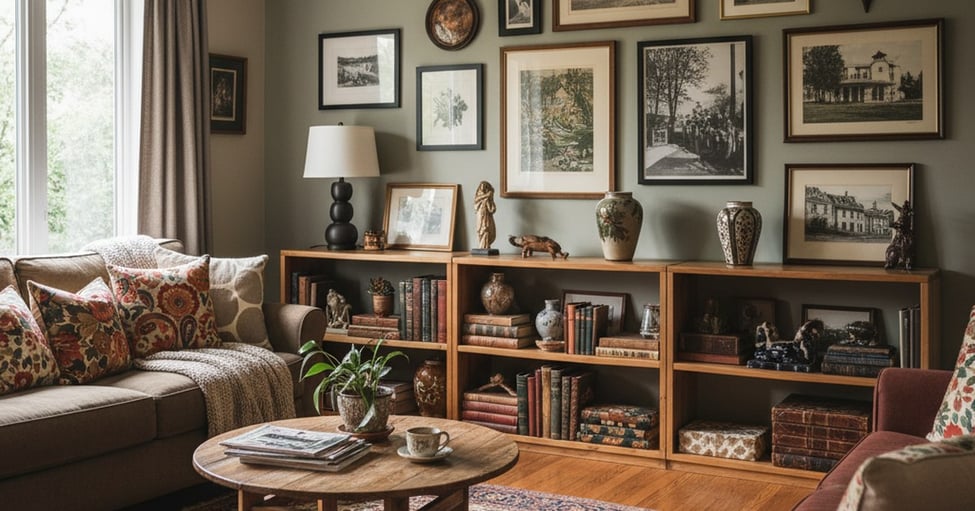
The Design Mood Has Shifted

Something noticeable is happening in home interiors right now. After years of clean lines, white walls, and keeping things minimal, the pendulum is swinging back toward homes that actually look like someone lives in them. According to a January 2026 piece by Amanda Lauren in Forbes, the designers and industry insiders she spoke with are pointing to a common theme: people want spaces that feel intentional, not just on-trend.
Here are the eight directions they say are shaping interiors this year.
Maximalism, But Make It Personal

This isn't the maximalism of just piling more stuff in a room. Stephanie Hunt, founder of The Flairhunter, describes it as curating objects that actually mean something to you. Think inherited pieces from a grandparent, handmade ceramics, or a single bold chair that nobody else would choose. The point is personality over pattern-following. Memorable homes reflect the people in them, not a mood board.
Sustainability Is Now Expected

Conscious buying has moved from niche to normal. Andrew Haltom of Rugs.com notes that eco-friendly materials are increasingly standard, not optional. Buyers are asking where things come from and how long they'll last. Brands that can't answer those questions are losing ground.
Function Has Become a Design Statement
Pieces that do double duty are everywhere. Ottomans with storage, coffee tables that convert into workstations, washable rugs for households with kids or pets. Good design in 2026 means something works as well as it looks. Haltom points to this as one of the clearest consumer shifts he's seeing.
Biophilic Design Gets Smarter
Plant walls had their moment. Now the approach is broader. Janine Weeks, principal designer at Weeks Design, describes biophilic design as less about one big installation and more about weaving nature throughout a space — through lighting that supports your body clock, natural materials, landscape-inspired colour, and actual air quality. It's a whole-room mindset rather than a feature wall.
Slow Decorating Is Gaining Traction
Buying everything at once to finish a room quickly is falling out of favour. Janette Mallory of Janette Mallory Interiors says the shift is toward meaningful pieces added over time, things that tell a story rather than fill a gap. The result ends up looking more considered than rooms furnished in a weekend. And it tends to hold up longer too, which matters if you're planning to eventually sell.
Antiques and Thrift Finds Are Having a Real Moment
Vintage shopping for home décor has moved well past fashion. Marissa Van Noy, founder of Three Golden Cranes, puts it plainly: mass-produced pieces can fill a room, but vintage items carry actual history. They add something that flat-pack furniture simply can't replicate. For buyers and sellers alike, a room with a few genuine vintage pieces tends to read as more curated on camera and in person.
Tapestries Are Back on the Walls
Textiles with real texture and craft are reclaiming wall space. Van Noy describes tapestries as pieces that bring narrative and depth to a room. You don't have to spend a lot either — the vintage market and accessible reproductions make this one of the more affordable ways to shift the feel of a space.
Tassels Are Everywhere
Small detail, big effect. Van Noy says tassels are showing up on drapery, lamps, and furniture as a way to add colour and movement without committing to something irreversible. They layer well and work across a lot of different styles, which is probably why they've stuck around.
---
**The takeaway:** the clearest thread running through all eight trends is intention. Whether you're refreshing a space to enjoy it longer or preparing a home to show well, the rooms that land in 2026 are the ones where choices feel deliberate, not default.