A November 19 article from Instaoffer makes a useful point: aging in place usually starts with simple changes, not a full renovation.
That matters because most people do not think about grab bars, stair lighting, handrails, or walker clearance until something has already happened. A fall. A hospital stay. A parent suddenly needing help getting around the house.
It is much easier to make these updates calmly, while everyone has time to plan, price the work, and decide what actually makes sense for the home.
There is one part of the article I would treat carefully, though: the tax-credit section. Instaoffer refers to the federal Home Accessibility Tax Credit and a $20,000 expense limit, but before anyone budgets around that, I would want to check the current CRA rules directly or speak with a tax professional.
The home-safety advice is practical. The tax side needs confirmation before you rely on it.
Start With the Stairs
Stairs are one of the first places I would look in any home where someone plans to stay long term.
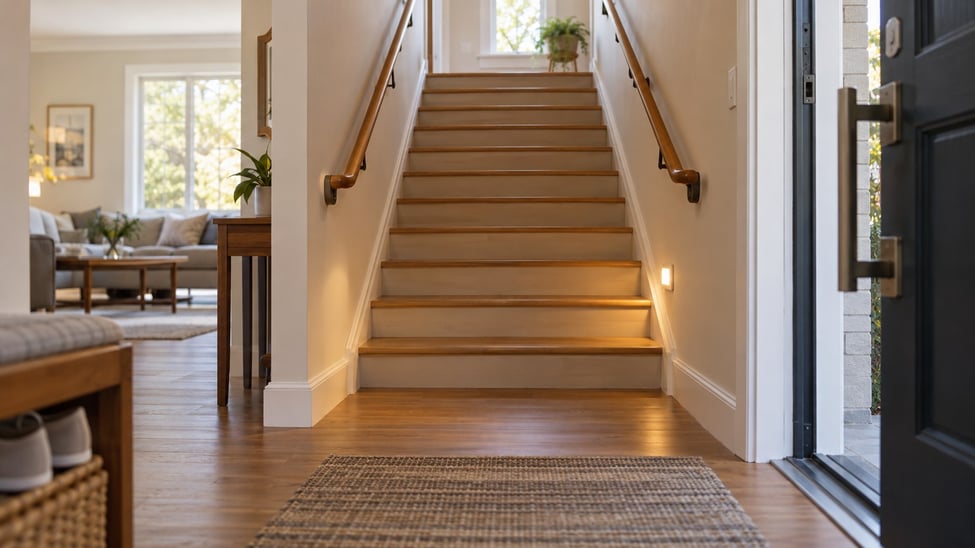
Instaoffer points to handrails on both sides of the stairs, not just one. That is a small detail, but it matters. If one side is harder to grip, or someone is carrying laundry, groceries, or a cane, having a secure rail on both sides gives them more options.
This does not have to be a luxury project. A solid, properly installed handrail can make a house feel safer right away. The same goes for lighting.
Night lights near stairs are simple, inexpensive, and easy to overlook. The first step down should never be in the dark. If someone wakes up at night, or if the hallway lighting is poor, a small light can prevent a big problem.
Exterior steps matter too. In our climate, snow and ice can turn a normal front walkway into a hazard quickly. Clearing the path, fixing uneven steps, and making sure there is something sturdy to hold can be just as important as anything inside the home.
Bathrooms Deserve Extra Attention
Bathrooms are another high-risk area because water, tile, and tight spaces do not leave much room for error.
Instaoffer recommends adding a grab bar in the tub area and checking whether the bathroom walls can support rails. That second part is important. A grab bar is only useful if it is properly anchored. A towel bar is not a safety device, even if people use it like one.
If you are already planning bathroom work, it is worth thinking ahead. Can blocking be added behind the wall for future grab bars? Is the tub becoming harder to step into? Would a comfort-height toilet make sense? Is there enough room to move safely if mobility changes later?
These are not always exciting upgrades, but they are practical ones. They can also matter for resale depending on the property. A well-planned main-floor bathroom, or a safer ensuite in a bungalow, can appeal to buyers who are thinking about parents, accessibility, or their own long-term needs.
The key is making the safety features look intentional. Grab bars, better lighting, non-slip flooring, and clear space can be done cleanly. They do not have to make the home feel institutional.
Clear the Everyday Trip Hazards
Some of the most useful aging-in-place changes cost very little.
Instaoffer mentions clearing floors and walkways, including scatter rugs and other tripping hazards. This is the kind of thing families can deal with on a weekend visit.
Look at the home the way someone moves through it every day. Is there a rug edge curling up in the hallway? Are shoes collecting near the front door? Is there a narrow path between furniture? Are extension cords running across a room? Is the laundry area awkward to reach?
Small obstacles become bigger problems when balance, eyesight, or strength changes.
This is also where furniture layout matters. A room can look fine in photos but still be difficult to move through. Wider paths, fewer sharp corners, and better lighting can make a home easier to live in without changing its character.
If you are helping a parent, try not to make it feel like you are taking over their house. The better conversation is usually, “What would make this easier for you every day?” rather than, “We need to fix all of this.”
Check Doorways Before You Need Them
Doorway width is easy to ignore until a walker, wheelchair, or temporary mobility aid enters the picture.
Instaoffer suggests checking whether entry doors and interior doors can accommodate a walker. That is smart because widening a doorway, adding a ramp, or changing an entry setup usually takes more planning than installing a night light.
This matters even more in older homes. Narrow halls, tight powder rooms, raised thresholds, and split-level layouts can all become issues later.
If a home has a main-floor bedroom or den that could become one, that is worth noting. If the only full bathroom is upstairs, that is worth thinking about too. Aging in place is not just about one grab bar. It is about whether the home can still function if stairs become harder, recovery takes longer, or outside help is needed.
Condo owners and renters should also start early. Instaoffer notes that people in condos or rentals may need to speak with the board or landlord before making changes. That is not something you want to discover after you have already booked a contractor.
Be Careful With the Tax-Credit Claims
The article also discusses the federal Home Accessibility Tax Credit, including a $20,000 annual expense limit and eligibility for people 65 or older, or those eligible for the disability tax credit.
That may be accurate, but I would not rely on a summary article alone for tax planning.
Before starting work because you expect a credit, check the CRA’s current guidance for line 31285, confirm what counts as an eligible expense, and ask your accountant if you are unsure. Tax rules can be specific. Materials, permits, professional labour, medical-expense overlap, and DIY work can all be treated differently.
The same caution applies to provincial programs. Instaoffer notes that Ontario’s Seniors’ Home Safety Tax Credit was temporary and applied to prior tax years. That is exactly why checking current rules matters.
The practical home changes are still worth considering, tax credit or not. Just do not assume every project qualifies.
*The takeaway:* if you want to stay in a home longer, start with safety, stairs, bathrooms, lighting, clear pathways, and door access. Then verify any tax credit directly before you build it into the budget.