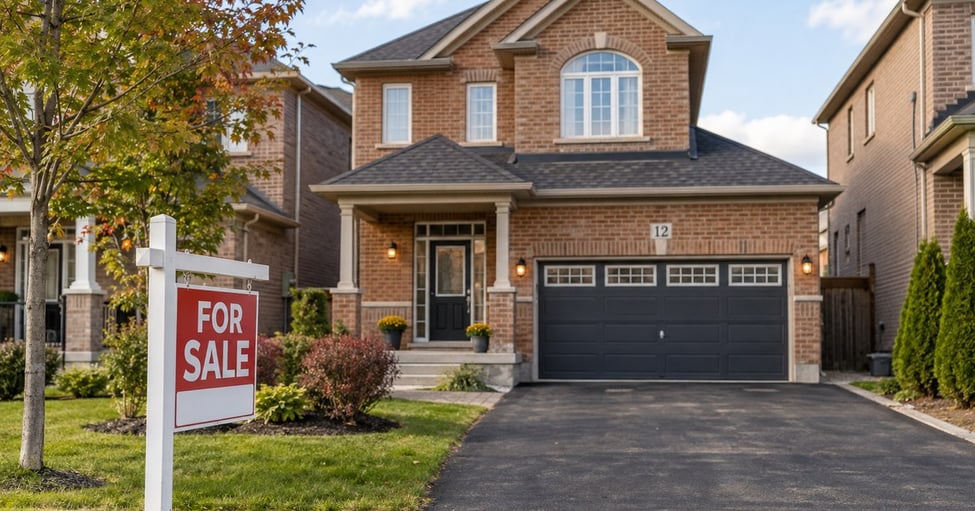
The latest Brampton numbers look soft at first glance, and honestly, they are.
According to Toronto Regional Real Estate Board data reported by Metroland, the average Brampton home price landed at $854,322 in September 2026. That is down 3.7 per cent from August and down 8 per cent compared with September 2025.
That does not mean every home in Brampton suddenly lost the same amount of value. Averages can move around depending on what sold in a given month. But when prices are down year-over-year across almost every property type, buyers and sellers should pay attention.
The bigger story is not just the headline price. It is the mix of lower sales, longer decision-making, and buyers being very selective.
The Market Is Softer, But Not Frozen

There were 404 sales in Brampton in September, with homes taking an average of 32 days to sell. Sales were down 8.6 per cent from a year earlier.
That tells us demand is still there, but it is not urgent demand. Buyers are looking. They are writing offers. But they are also comparing more carefully, watching rates, and pushing back on price when something feels stretched.
Active listings sat at 1,785 at the end of September. Interestingly, that was down 27.3 per cent from a year ago. So this is not simply a story of inventory exploding and crushing prices.
It is more nuanced than that. Fewer buyers are acting quickly, and the buyers who are active have more negotiating power than they did during the hotter years. At the same time, not every seller is rushing to list. Some homeowners are waiting, renting, refinancing, or holding off unless they have a real reason to move.
That combination can make the market feel slow even when inventory is not unusually high.
Detached Homes Are Back Around the Million-Dollar Mark

Detached homes averaged about $1 million in September. That was down 1.9 per cent from August and 6.2 per cent from last year.
There were 234 detached sales, which still made detached homes the largest part of Brampton’s resale market. They averaged 31 days on market, with just over 1,000 active detached listings at month-end.
For sellers, this matters because the million-dollar line is psychological. A home listed just above or below that point can attract a very different buyer pool, especially when financing is tight.
For buyers, it means detached homes may be more reachable than they were a year ago, but affordability is still not easy. A lower sale price helps, but mortgage payment, property tax, insurance, and maintenance all have to fit together.
This is where planning matters. A buyer who only looks at the purchase price may miss the real monthly cost. A seller who only remembers peak pricing may miss where today’s buyers are actually comfortable.
Semis and Attached Homes Held Up Better Month-to-Month

Not every property type moved the same way.
Semi-detached homes averaged $778,223, up slightly from August but still down 3.5 per cent year-over-year. Attached homes averaged $737,900, also up modestly from August, while still down 6.5 per cent from last year.
That small monthly increase does not erase the broader softness, but it does show why local details matter. Some buyers who cannot stretch to detached prices are still looking hard at semis and attached homes. For many families, that segment can be the compromise between space, location, and monthly payment.
It also means sellers in these categories should not assume the market is dead. Good homes can still move. But pricing has to be realistic, and presentation matters more when buyers have choices.
The days of listing high and waiting for someone to catch up are mostly gone, at least for now.
Condos Are Feeling More Pressure
The condo side of the Brampton market had a tougher September.
Townhouse-style condos averaged $548,813, down 3.6 per cent from August and 9.6 per cent from last year. Apartment-style condos averaged $422,389, down 2.8 per cent month-over-month and 10.4 per cent year-over-year.
Apartment condos also took longer to sell, averaging 52 days on market. That is a notable gap compared with detached, semi-detached, and attached homes.
Part of this comes down to affordability, but not in the way people sometimes assume. Condos have lower purchase prices, but buyers are looking closely at monthly carrying costs. Condo fees, possible fee increases, special assessments, and parking all matter.
For first-time buyers, a condo may still be the best entry point. But the numbers need to be reviewed properly. A $422,000 condo with higher fees may not feel as affordable as the price tag suggests.
For condo sellers, the lesson is simple: buyers are comparing value very directly. Condition, fees, building reputation, parking, and pricing all need to line up.
The Ten-Year View Still Matters
One detail in the Metroland report is easy to miss. Compared with September 2016, the average Brampton home price is still up 38 per cent.
Detached homes are up by more than $275,000 over that period. Semis, attached homes, condo townhomes, and apartment condos are all meaningfully higher than they were a decade ago.
That does not make the current decline irrelevant. If you bought near the peak and need to sell now, the recent drop matters a lot. If your mortgage is renewing and your payment is jumping, the ten-year gain does not solve your monthly budget.
But it does help put the market in context. Real estate does not move in a straight line. Brampton has had a strong long-term run, and now the market is adjusting to higher borrowing costs, cautious buyers, and a different pace.
What Buyers and Sellers Should Do With This
If you are buying in Brampton, this is a market where patience can help. You may have room to negotiate, especially on homes that have been sitting or need work. But do not confuse a softer market with a risk-free one. Get the financing checked properly before you write, and run the payment at today’s rate, not the rate you hope shows up later.
If you are selling, the first two weeks matter. Pricing too high can cost you momentum, especially when buyers are already cautious. Look at recent comparable sales, not old peak numbers, and be honest about condition.
If you are renewing a mortgage and trying to decide whether to sell, refinance, or hold, start that conversation early. The worst decisions usually happen under pressure.
*The takeaway:* Brampton’s market has clearly cooled, but it has not disappeared. Buyers have more room to think, sellers need sharper pricing, and both sides need to make decisions based on current numbers, not memories of the peak.