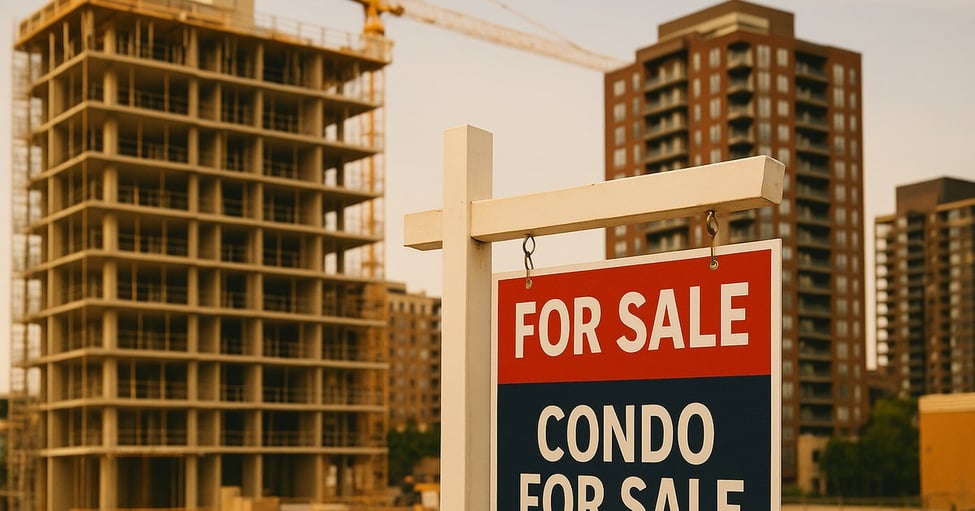
The condo market is giving buyers a very different conversation than it did a few years ago.
A recent report by Teviah Moro in The Hamilton Spectator looked at the number of unsold new and planned condo units in Hamilton’s lower central city. The headline number is hard to ignore: roughly 1,000 unsold units in that part of the city, according to second-quarter analysis from Zonda Urban.
That does not mean every condo is a bad buy. It also does not mean Hamilton is finished as a market. But it does mean buyers, investors, and sellers need to look at condo numbers with a lot more care than they did during the boom.
What Changed So Quickly

A few years ago, Hamilton was getting a lot of attention from Toronto-area buyers who wanted more value for their money. That made sense. If downtown Toronto pricing felt out of reach, looking further into the 905 and GTHA was a logical move.
But the market that supported that move has changed.
Higher borrowing costs, high purchase prices, construction cost pressure, and weaker investor demand have all hit the condo market at the same time. According to Zonda Urban, the central lower Hamilton area they studied had 1,127 unsold condo units at the end of the second quarter. That represented about 34 per cent of the supply that was under construction, in preconstruction, or recently completed.
For context, the report noted Vaughan Metropolitan Centre had 966 unsold units, equal to 43 per cent of its supply. Toronto’s Entertainment District had 711 unsold units, or 27 per cent of inventory.
So this is not just a Hamilton story. It is part of a wider condo reset across the GTHA.
Developers Are Changing Their Plans

One of the clearest signs of stress is what developers are doing with projects that were originally planned as condos.
Some projects have been cancelled or paused. Others are being reconsidered as rental buildings. That matters because most condo developers need a strong level of presales before construction financing becomes realistic. The Spectator notes that a typical threshold is around 70 per cent presold.
If buyers are not lining up, the math gets difficult fast.
In Hamilton, some developers are now looking at rental options instead of pushing ahead with condo plans. Others are using incentives, rent-to-own programs, or extended deposit structures to bring buyers back to the table.
That tells us two things.
First, developers still see long-term value in these locations. They are not walking away from the idea that people will want to live downtown.
Second, the old pricing and product mix may not work the same way anymore. Buyers are asking harder questions, lenders are more cautious, and investors are not absorbing small units the way they used to.
Lower Prices Do Not Automatically Mean a Deal

Zonda Urban’s Pauline Lierman told The Spectator that new Hamilton condos have come down to roughly $900 per square foot from a peak around $1,150.
That is a meaningful drop.
For buyers, it can create room to negotiate. You may see better deposit terms, assignment flexibility, parking incentives, or pricing that would not have been available during the hotter market.
But a lower price is only one part of the decision.
You still need to ask practical questions:
- Is the layout actually usable? - Who is the likely future buyer or tenant? - What are the expected condo fees? - Is the building mostly investor-owned or owner-occupied? - How much comparable inventory is coming nearby? - Can you comfortably carry the payment if rents soften or rates move?
This is where people can get caught. A unit can be cheaper than it was two years ago and still not be the right purchase for your situation.
Especially with smaller units, the layout matters. A low square-foot price does not help much if the space is awkward, hard to furnish, or only appeals to a very narrow renter pool.
What This Means for Buyers and Investors
If you are a first-time buyer, this kind of market can be useful. Less competition gives you more time to think, more room to negotiate, and a better chance of avoiding panic decisions.
If you are an investor, the bar is higher now. The old assumption that any preconstruction condo would rise by closing is not something I would rely on. You need to run the numbers using realistic rent, realistic vacancy, realistic closing costs, and a mortgage payment that works even if conditions are not perfect.
If you are comparing Hamilton to Mississauga, Toronto, Brampton, Vaughan, or Oakville, do not just compare the sticker price. Compare the full ownership cost and the exit plan.
A cheaper unit in a weaker resale pocket may not be safer than a more expensive unit in a stronger location. On the other hand, a well-priced unit with a functional layout in a growing area can still make sense if the numbers are sound.
The key is not treating “buyer’s market” as permission to buy anything.
Sellers Need to Read the Room Too
For condo owners thinking about selling, this is a reminder that pricing has to match the current market, not the 2021 market.
If there is a lot of unsold new inventory nearby, resale units are competing with developer incentives, fresh finishes, extended deposit options, and sometimes direct price reductions. That can put pressure on older units, especially if the layout is dated or the building has higher fees.
Presentation matters, but pricing matters more. A well-staged condo can still sit if buyers can get a better deal across the street from a builder.
The Takeaway
Hamilton’s condo slowdown is not a reason to panic, but it is a reason to be careful. More inventory and lower prices can create opportunity, but only for buyers who understand the numbers, the building, the layout, and the long-term plan before they commit.