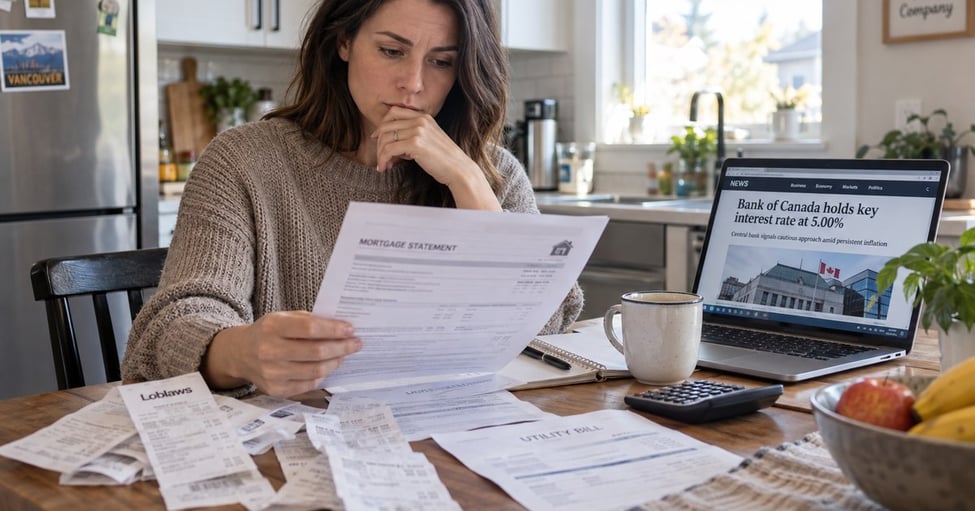
If your mortgage plan depends on rates getting easier from here, this is the warning light.
A new Nanos Research poll reported by Bloomberg News in the Financial Post found that 54 per cent of Canadians expect inflation to be higher a year from now than it is today. Current inflation is sitting around three per cent, which is already at the top end of the Bank of Canada’s target range.
That does not mean a rate hike is guaranteed. But it does mean the Bank of Canada has a harder decision in front of it.
For buyers, homeowners, and anyone renewing a mortgage soon, this matters. Inflation expectations can influence Bank of Canada decisions, bond yields, fixed-rate pricing, and how much room you should leave in your monthly budget.
Why Expectations Matter
Inflation is not just about what prices are doing today. It is also about what people expect prices to do next.
If households believe groceries, gas, insurance, rent, and everyday services will keep getting more expensive, behaviour starts to change. Workers may push harder for wage increases. Businesses may feel more comfortable raising prices. Some buyers may rush purchases because they worry waiting will cost more.
That is what central banks pay attention to. Once people start building higher inflation into their decisions, it becomes harder to bring inflation back down without putting more pressure on the economy.
Nik Nanos described the public mood as anxious when speaking with Bloomberg. That makes sense. Many Canadians know some of these pressures are global, especially energy prices and geopolitical instability. But knowing why prices are up does not make the grocery bill, gas bill, or mortgage payment any easier to manage.
What the Bank of Canada Is Weighing
The Bank of Canada’s policy rate is currently 2.25 per cent. The question is whether that is enough to keep inflation from spreading more broadly.
The recent inflation pressure started with gasoline prices after a global oil shock earlier this year. Headline inflation has been sitting near three per cent for months. The Bank now has to decide whether higher energy costs are staying mostly contained, or whether they are feeding into transportation, food, services, and wages.
That is a difficult balance.
If the Bank raises rates too aggressively, it can slow spending and weaken an already uncertain economy. If it does not act and inflation expectations keep drifting higher, price pressure can become harder to control later.
According to the Financial Post report, traders were pricing roughly a one-in-three chance of a rate increase at the Bank’s October 28 meeting. They were also pricing in the possibility of more increases over the following year.
Markets can change quickly, so those expectations are not a forecast you should treat as locked in. But they do tell us something important: the conversation has shifted away from easy rate cuts.
What This Means for Mortgage Borrowers
For variable-rate borrowers, the link is fairly direct. If the Bank of Canada raises its policy rate, lender prime rates usually move shortly after. That can increase payments on adjustable-rate mortgages. For some variable products where the payment stays the same, more of each payment may go toward interest instead of principal.
For fixed-rate borrowers, the connection is different. Fixed mortgage rates are tied more closely to bond yields. When investors believe inflation will stay higher, bond yields can rise, and fixed mortgage rates can follow.
That is why fixed rates can move before the Bank of Canada makes any announcement.
If your mortgage is renewing in the next six to twelve months, do not wait for the renewal letter and hope the offer is fair. A lender’s first offer is not always the best option available. You want time to compare rate, term, penalty structure, prepayment options, and whether a shorter or longer term actually fits your plans.
The lowest rate on the screen is not always the best mortgage if the structure boxes you in later.
What Buyers Should Do Now
If you are buying, the biggest mistake is building your plan around the best-case scenario.
Do not only ask, “What can I afford if rates stay where they are?” Ask what the payment looks like if rates are half a point higher. Ask what happens if property taxes are higher than expected. Ask what happens if condo fees rise next year, or if one income changes.
That is not meant to scare anyone out of buying. It is meant to avoid surprises after closing.
If you are renewing, start early. More time means more options. It also matters now that many uninsured borrowers may be able to switch lenders at renewal without being stress tested again, depending on the file and lender requirements.
If you already have a variable rate, this is a good time to revisit your comfort level. Some borrowers have enough room in the budget and still prefer the flexibility. Others would rather lock in a payment they can plan around. Neither choice is automatically right.
The right answer depends on your income, timeline, risk tolerance, debt level, and future plans.
The Takeaway
Canadians expecting higher inflation does not guarantee the Bank of Canada will raise rates. But it does raise the pressure around the decision.
For mortgage borrowers, the practical move is simple: do not build your plan around rates getting easier. Know your numbers, compare your options early, and leave room in the budget for things to change.