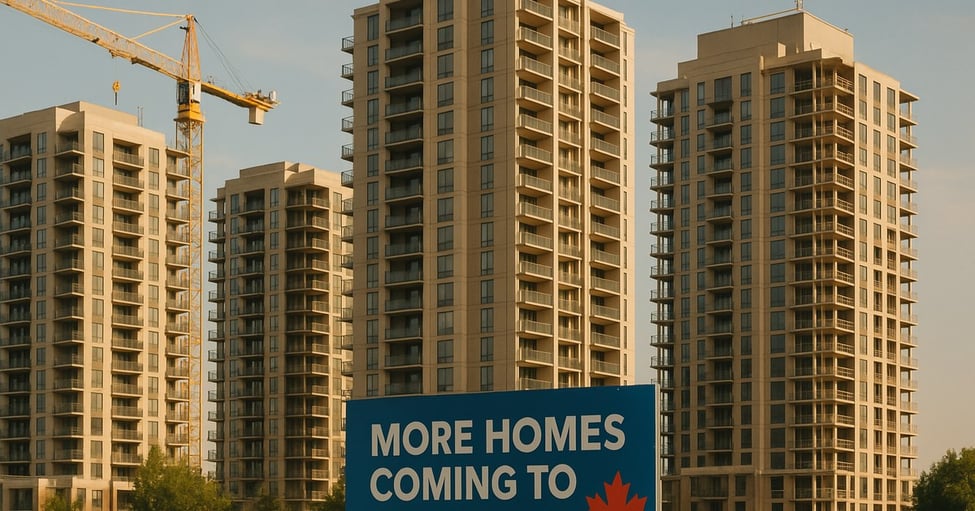
Business in Vancouver reported that Prime Minister Mark Carney and B.C. Premier David Eby have announced a major housing package aimed at getting British Columbia’s real estate market moving again.
The headline number is big: $3.2 billion combined from the federal and provincial governments to reduce development cost charges on multi-unit housing in priority communities. There is also a separate plan to buy more than 2,200 vacant condo units and convert them into affordable housing.
On paper, the goal is simple enough: lower building costs, clear unsold inventory, and create more homes people can actually afford.
The harder question is whether it works that cleanly in real life.
What Was Announced

The first part of the plan is about development cost charges, often called DCCs. These are fees municipalities and regional governments collect from developers to help pay for infrastructure tied to growth, things like water systems, wastewater systems, and roads.
According to Business in Vancouver, Ottawa is committing $1.6 billion over 10 years, with B.C. matching that amount. The money is meant to cut DCCs for multi-unit housing by as much as 50 per cent, up to $40,000 per unit in certain communities.
That matters because development charges have become a major part of the cost stack on new housing. When those costs rise, builders argue that projects become harder to finance and buyers end up paying more.
But there is a catch. If taxpayers are helping reduce those charges, people should be asking a very direct question: do those savings actually make homes cheaper for buyers, or do they mostly help developers make projects viable again?
That answer is not clear yet.
The Big Question: Who Gets the Benefit?

This is where the announcement gets more complicated.
Lowering development charges can help get projects built, especially when interest costs, construction costs, and slower sales are all squeezing builders at the same time. If a project does not get built, supply gets worse, and that does not help buyers over the long term.
At the same time, affordability is not just about supply. It is about the final price people pay and the monthly payment they can carry.
If a developer saves $40,000 per unit, but the condo still sells for the same price, the buyer has not really benefited. The project may be healthier financially, but affordability has not changed much at the kitchen table level.
That is why the details matter. Will there be conditions attached? Will prices be monitored? Will the savings be tied to below-market units, rental housing, or specific affordability targets?
Without that, it is hard to know whether this is a housing affordability policy or a market stabilization policy.
Those are not the same thing.
Why Unsold Condos Matter

The second part of the plan is even more interesting. The federal government has said it wants to help convert more than 2,200 vacant condo units in priority growth areas into affordable homes.
That tells us something important: the issue is not only that Canada has too few homes. In some places, we also have the wrong homes at the wrong prices.
A two-bedroom condo selling near $1.1 million, which Business in Vancouver noted in the area where the announcement took place, is not affordable for most households just because it technically exists. Supply matters, but supply at a price people cannot carry does not solve the whole problem.
Buying unsold units could help clear inventory and put people into homes faster than waiting years for new projects. It could also give developers and lenders some relief by taking stale units off the books.
But again, the key question is price.
If governments buy unsold condos at prices that protect developers from losses, taxpayers are absorbing part of the market risk. If governments negotiate hard and secure units at meaningful discounts, the public may get a better deal.
We will have to wait for the fall, when the government says more details will be released, to understand how those purchases will actually work.
Why This Matters Outside B.C.
This announcement is happening in British Columbia, but it is worth watching from Ontario.
Housing policy ideas travel. If a program appears to unlock stalled projects or convert unsold inventory into affordable housing, other provinces and municipalities will pay attention. The GTA has its own issues with affordability, development charges, slow condo sales, and buyers who are struggling to make monthly payments work.
For buyers, the lesson is not to assume every government announcement automatically makes housing more affordable. Programs can help, but your personal numbers still matter most: purchase price, down payment, mortgage payment, condo fees, property taxes, insurance, and your renewal risk a few years down the road.
For sellers and investors, the lesson is that governments are paying close attention to unsold inventory. That can influence future policy, especially in condo-heavy markets.
For builders, this may be a sign that senior governments are willing to intervene more directly when projects stall. But public support will likely come with more scrutiny about who benefits.
The Takeaway
The B.C. announcement is not just about building more housing. It is about trying to restart a market where costs are high, buyers are stretched, and some completed condos are sitting empty.
That may help in the short term, especially if vacant units become homes people can actually live in. But affordability will depend on the details: what governments pay, what conditions are attached, and whether savings make their way to the people buying or renting the homes.
More housing matters. But more housing at the right price matters more.