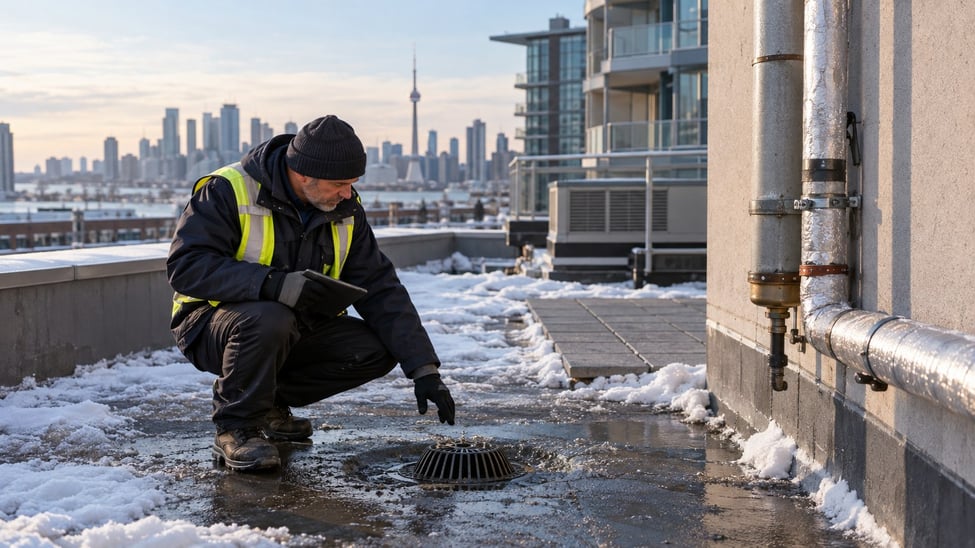
REMI Network recently published a practical winter-preparation checklist for commercial buildings ahead of the first snowfall. The advice is sensible: seal drafts, clear roof drains, protect exposed pipes, repair pavement damage, and arrange snow clearing before the weather turns.
That is all useful. But it is also broad.
The article does not identify a specific jurisdiction, and it does not provide GTA-specific weather evidence, condo-specific procedures, or numbers showing how much money these steps save. So if you are a condo board member, property manager, unit owner, or buyer reviewing a building, it is best to treat the list as a starting point, not a complete winter plan.
What the REMI Checklist Gets Right
The strongest part of the REMI piece is that it focuses on the basics that actually cause problems once winter starts.
Roof drainage is a big one. If drains are blocked by leaves, debris, or overhanging branches, water can sit where it should not. Once temperatures move above and below freezing, that water can become a bigger issue for the roof system and the interior spaces below.
Pipes are another obvious but sometimes overlooked risk. Exterior hose bibs, irrigation lines, exposed piping, meters, and backflow preventers all need attention before freezing weather arrives. Waiting until after the first deep freeze is usually when people discover what should have been shut off or insulated earlier.
The same goes for pavement. Cracks in walkways, drive lanes, and parking areas are easier to deal with before winter. Water gets in, freezes, expands, and makes small problems larger. For a condo corporation, that can mean trip hazards, complaints, and repair costs that could have been reduced with earlier patching.
Where Condo Buildings Need to Go Further
A commercial-building checklist is helpful, but condos are not just generic buildings. They have boards, property managers, reserve funds, owners, tenants, contractors, insurance considerations, and shared common elements.
That means the question is not only, “Did someone check the roof?”
The better questions are:
- Who is responsible for checking it? - When was it last inspected? - Is there a written record? - If a repair is needed, is it an operating expense or a reserve fund item? - Has the board approved the work? - Are residents being notified about seasonal changes, closures, or safety issues?
That level of detail matters because condo maintenance is not just about keeping the building comfortable. It affects budgets, owner confidence, liability exposure, and eventually resale.
If you are buying a condo, this is the kind of management quality that can show up between the lines. A building that handles seasonal maintenance early and documents it well is usually easier to understand than one where every issue seems reactive.
The First-Snowfall Items Worth Checking
If we were turning REMI’s list into a condo-focused pre-winter check, we would keep the same core categories but make them more specific.
Start with the roof and drainage. Confirm that roof drains, scuppers, gutters, and downspouts are clear. If there are known ponding areas, ask whether they have been inspected and whether any follow-up is planned.
Then look at building openings. Weather stripping, door sweeps, loading areas, garage doors, vestibules, and lobby entrances all affect drafts and heat loss. In a condo, those small details can turn into comfort complaints very quickly.
Next are pipes and water systems. Exterior taps should be shut off, hoses disconnected, irrigation systems winterized, and exposed pipes protected where needed. Mechanical rooms, parking garages, and service areas deserve extra attention because problems there can affect more than one unit.
Walkways and parking areas should also be reviewed before snow covers everything. Cracked pavement, uneven concrete, loose curbs, damaged catch basins, and poor lighting can all become bigger concerns once ice and snow are in the picture.
Finally, snow removal should not be improvised. The contractor, service standard, trigger depth, ice-control plan, salt storage, snow piling locations, and after-hours process should be clear before the first storm. Reflective stakes or markers can also help protect landscaping, curbs, drains, and other features that may be hidden once snow accumulates.
Why This Matters for Owners and Buyers
For owners, winter preparation affects more than convenience. A building that stays ahead of seasonal maintenance is less likely to be scrambling when the first storm hits. That does not guarantee no problems, but it lowers the odds of avoidable ones.
For buyers, this is another reminder that the unit is only part of the purchase. The building’s maintenance culture matters too.
When reviewing a condo, it is worth paying attention to the status certificate, reserve fund study, recent board minutes, and any recurring maintenance issues. If there are repeated complaints about leaks, icy walkways, garage drainage, or heating problems, those are not just small operational details. They can point to how well the building is being managed.
A clean lobby and nice finishes are easy to notice on a showing. Winter readiness is harder to see, but it can tell you a lot.
The Takeaway
REMI’s checklist is practical and worth using, but it should not be treated as a full condo winter plan on its own.
For GTA condo boards and property managers, the better approach is to take those broad maintenance ideas and add local procedures, building-specific responsibilities, documentation, contractor standards, and clear communication with residents.
The takeaway: winter preparation is not just about getting through the first snowfall. It is about showing that the building is being managed before small issues become expensive ones.