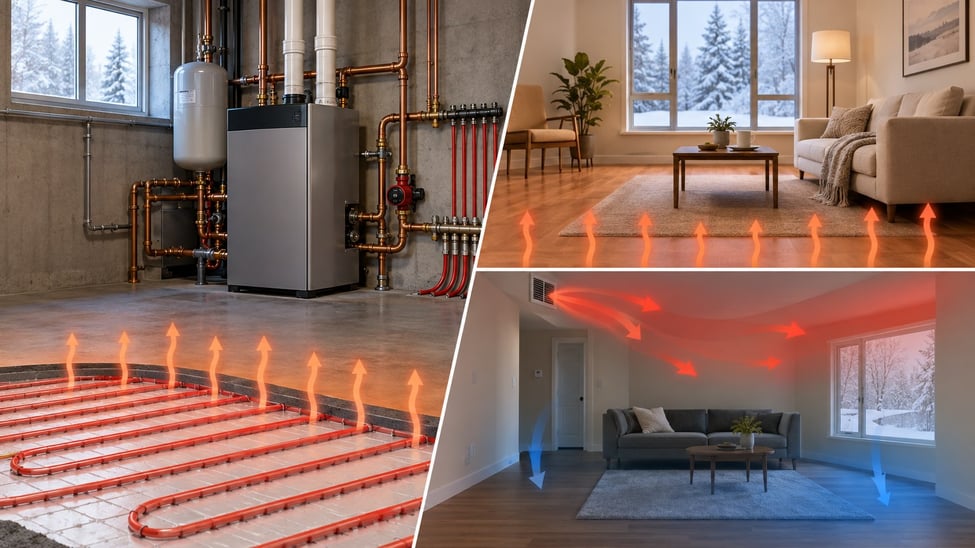
If you walk into a home with a boiler and radiators, it is easy to assume the heating system is old-fashioned. A lot of buyers do exactly that, especially if they have only ever lived with forced-air heat.
But that reaction can miss the point.
A recent CREA Café guide on hydronic heating makes a useful case for looking at these systems differently. Hydronic heating uses hot water to move heat through a home, through radiators, baseboards, in-floor tubing, or other components. In the right property, especially in colder Canadian markets, it can be a real comfort and efficiency feature.
That does not mean every boiler is automatically a selling point. Age, installation quality, maintenance, and future repair costs all matter. But a boiler should not be treated as a red flag just because it is unfamiliar.
Why Buyers Often Misread Boiler Systems

Many buyers understand forced-air furnaces because they are common. There is a furnace, there are ducts, warm air comes out of vents, and central air conditioning often uses the same ductwork.
Hydronic systems work differently, so they can feel less familiar at a showing. A buyer may see radiators and think, “old house problem,” when the better question is, “what condition is the system in, and how well does it heat the home?”
That distinction matters. A well-installed hydronic system can offer steady heat, quiet operation, and a different kind of comfort than forced air. Instead of blowing warm air into a room, it keeps heat in the water, radiators, or slab. That can make rooms feel more evenly heated, especially in older homes, additions, great rooms, or spaces with high ceilings.
The CREA Café article also points out something practical: with forced air, heat can be lost through ductwork before it reaches the room. With hydronic heat, the system delivers warmth closer to where people actually feel it.
For a buyer, that can translate into a home that simply feels better in January.
Efficiency Is Part of the Value Conversation

Heating costs matter in Canada. They matter even more when buyers are comparing monthly carrying costs, not just purchase price.
According to the CREA Café guide, high-efficiency condensing boilers can operate in the 85% to 95% efficiency range. The guide also notes that forced-air systems can lose heat through ductwork, which means some of the energy being paid for never fully reaches the living space.
The other important point is how modern boilers operate. A furnace often cycles on and off in bigger bursts. A modern condensing boiler can run at lower output for longer periods, keeping the temperature steadier instead of constantly starting and stopping.
That can mean less wear on equipment and a more consistent indoor temperature. For homeowners, the appeal is not just the utility bill. It is also the day-to-day comfort: fewer drafts, less noise, and less of that dry, blowing-air feeling some people dislike in winter.
This is where sellers should be careful not to undersell the system. If the boiler has been maintained, updated, or professionally installed, that information belongs in the conversation. Buyers do not need a sales pitch, but they do need context.
The Upgrade Potential Is Often Overlooked

One of the more interesting points in the CREA Café guide is that a boiler can be more than just a heat source for radiators.
Depending on the system and the home, hydronic infrastructure may be expandable. It can potentially support in-floor radiant heat, towel warmers, pool heating, snow melting for a driveway or walkway, or domestic hot water through an indirect water heater.
Not every home will be set up for all of that, and nobody should assume upgrades are simple without getting a qualified hydronics specialist involved. But the possibility matters.
Think about a buyer looking at a detached home with an older finished basement, a future bathroom renovation, or a long-term plan to redo the main floor. If the home already has hydronic infrastructure, there may be options that would not exist as easily with a basic forced-air setup.
For sellers, this can help reposition the system. Instead of “this house has radiators,” the better framing might be, “this home has a boiler-based heating system that may offer comfort, efficiency, and future upgrade flexibility.”
That is a very different conversation.
It Still Needs Proper Due Diligence
None of this means buyers should ignore the age or condition of the equipment.
A boiler system should be reviewed like any major home component. How old is the boiler? Has it been serviced? Are there signs of leaks? Are the radiators heating evenly? Has any work been done by qualified trades? Are there records?
If the buyer is serious about the property, a home inspection is a starting point, not the end of the conversation. For anything specific to hydronic heating, it is worth bringing in a qualified heating professional or hydronics specialist.
That is especially true if the buyer is planning future upgrades. There is a big difference between “this system has potential” and “this exact upgrade will be easy and inexpensive.” The right advice early can prevent expensive assumptions later.
There is also the cooling question. Some buyers worry that a hydronic home means they cannot have air conditioning. The answer depends on the property. Some homes use ductless heat pumps, high-velocity systems, or other cooling solutions. Again, the right professional can look at the specific home and explain what is realistic.
What This Means for Home Value
There is no simple resale premium we can attach to hydronic heating. The CREA Café article does not claim one, and we should not either.
But market appeal is not always about a neat percentage. Sometimes it is about reducing buyer hesitation.
If buyers understand that a boiler can be efficient, durable, quiet, and comfortable, they may be less likely to discount the home simply because the system is unfamiliar. In colder markets, that matters. A heating system that performs well through a Canadian winter is not a minor detail.
For sellers, the key is documentation and explanation. Service records, equipment age, upgrade details, and professional comments can help buyers feel more confident.
For buyers, the key is not to dismiss a home too quickly. A boiler may be older infrastructure, or it may be premium infrastructure. The difference comes down to condition, design, maintenance, and expert advice.
*The takeaway:* hydronic heating should not be treated as a problem by default. In the right home, a well-maintained boiler system can add comfort, efficiency, and buyer appeal, but it deserves a proper inspection before anyone makes assumptions.