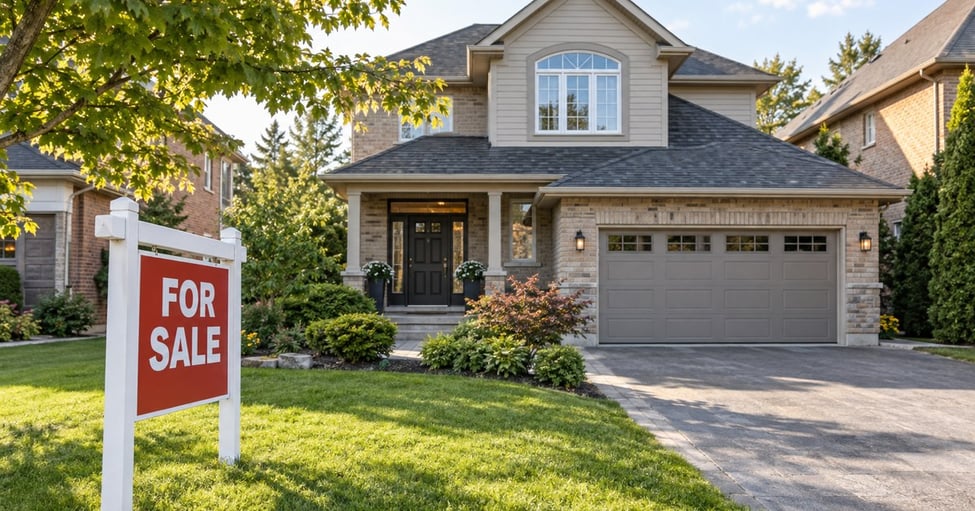
A lot of sellers are still pricing like it is 2021.
The problem is buyers are not qualifying like it is 2021. Their mortgage payments are higher, groceries are higher, insurance is higher, utilities are higher, and the monthly cost of owning a home has been squeezed from every direction.
That is the tension Rob Dundas wrote about recently in Real Estate Magazine Canada, using Niagara as the example. His point was blunt, but useful: what a seller wants for a property does not matter nearly as much as what buyers can actually carry.
That is not just a Niagara story. We are seeing versions of it across Ontario.
The Peak Price Is Not the Current Market

One of the hardest things for sellers to accept is that a past price is not a guaranteed floor.
If a similar home sold for a huge number during the pandemic, that sale may still be sitting in the back of your mind. Maybe a neighbour got an unbelievable price. Maybe you saw a smaller home sell for more than you ever expected. Maybe you delayed selling because you assumed the market would keep climbing.
But buyers today are working with different math.
A $650,000 home at a low pandemic-era rate is a very different monthly commitment than a $650,000 home at a higher rate, with higher property taxes, higher insurance, and more expensive day-to-day living. Even if prices have softened from the peak, affordability can still feel worse because the total monthly burden is heavier.
That is the part many sellers miss. Buyers may still want the home. They may still like the neighbourhood. They may still see the long-term value. They just may not be able to make the numbers work.
Active Listings Are Not Always Comparables

This is where pricing can go sideways.
A seller sees another property listed at a high number and assumes that is the market. But an asking price is not proof of value. It is only proof of what someone is hoping to get.
A home that has been sitting for months without serious offers is not a strong comparable. It is a warning sign.
Sold properties matter more than stale listings. Recent sales tell you where buyers have actually agreed to put money on the table. Active listings tell you what your competition looks like, but they do not prove what your home is worth.
This matters because overpricing has a cost. The first couple of weeks on market are usually when a listing gets the most attention. If the price is too high, serious buyers may skip it. Then the home sits. Then people start wondering what is wrong with it. Then the eventual price reduction feels reactive instead of strategic.
That does not mean every seller needs to underprice. It means the list price has to be connected to real buyer behaviour, not wishful thinking.
Buyers Are Not Being Cheap, They Are Being Limited

It is easy to look at slower showings or lower offers and assume buyers are just being difficult.
Most are not. They are dealing with lender limits, stress test rules, down payment pressure, and monthly budgets that have very little room for error.
A buyer might be pre-approved, but that does not mean they are comfortable spending to the absolute top of their approval. Many are building in space for daycare, car payments, condo fees, repairs, parental help, or the possibility that their renewal rate could be different in a few years.
That caution is not irrational. It is what responsible buyers should be doing.
We also have to remember that the market is not only shaped by desire. It is shaped by capacity. People can want homes all day long, but if the payment does not fit, the deal does not happen.
Realistic Sellers Still Have Options
The sellers who adjust fastest usually have the cleanest experience.
That does not always mean taking the first low offer. It means being honest about the current pool of buyers, the condition of the home, the competition, and the carrying costs if the property sits.
If you need to sell, the key questions are practical:
What have comparable homes actually sold for in the last 30 to 60 days?
How many similar homes are competing with yours right now?
Are buyers choosing updated homes over homes that need work?
What is your monthly cost if you hold the property for another three, six, or nine months?
What price would create urgency without leaving real money behind?
Those questions are much more useful than asking what the home might have sold for at the peak.
Slower Markets Create Opportunity Too
There is another side to this.
For buyers who are prepared, slower markets can create openings. More inventory means more choice. Longer days on market can mean better negotiating room. Sellers who are realistic may be willing to work with conditions, closing dates, repairs, or price adjustments in a way they would not have considered during the frenzy.
But this only helps if the buyer is prepared. That means having financing reviewed properly, knowing the full monthly cost, understanding the property’s condition, and not assuming every lower price is automatically a bargain.
A discounted home with major repair costs still needs careful math.
The same rule applies to both sides: emotion can start the conversation, but the numbers decide whether the deal works.
**The takeaway:** your home is worth what a real buyer can justify and sustain right now. Not what it was worth at the peak, not what a neighbour is asking, and not what you hoped it would be. The sooner sellers price around current math, the better chance they have of making a clean move.